
Innovate
About MOPRED
In order for medicine to fulfill its promise of personalized treatments based on a better understanding of disease biology, it is crucial that computer and statistical tools are available to analyze the constantly growing amount of patient data. So far, research efforts in biomedical data science have primarily focused on developing specialized algorithms to analyze specific types of data, such as (single-cell) RNA-Seq data, functional MRI data, or data from immunohistochemical stains.
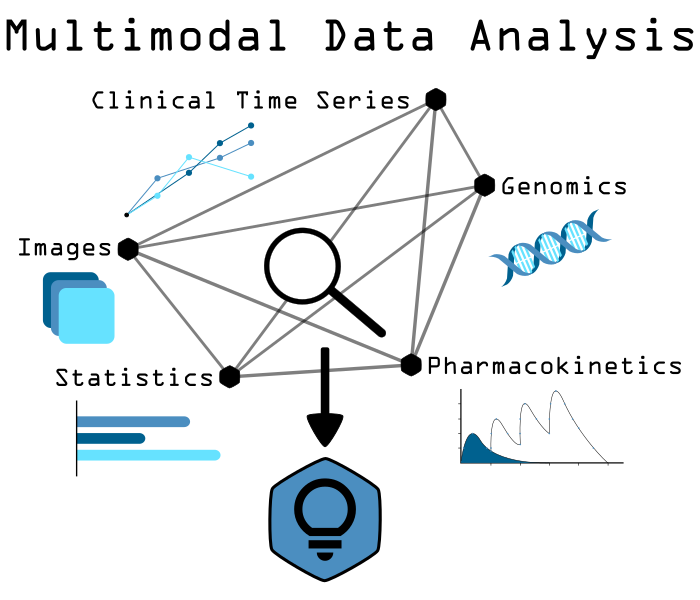
While some efforts have been made to develop integrative tools for related omics data (such as single-cell RNA-seq and ATAC-seq), data in modern medicine are often available from a variety of sources, including clinical time series data, imaging data, text data, and/or pharmacokinetic data in addition to genomic data. A comprehensive characterization of patients and model organisms, crucial for the advancement of personalized medicine, requires the comprehensive integration of these multimodal data from available sources.
Within this consortium, we define a modality as an experimental measurement on a patient/disease model organism. Depending on the type of technology, this measurement can take very different digital forms (e.g., image, sequencing result, proteomics, etc.). Multimodal then refers to a data analysis scenario where at least two data modalities need to be integrated. In particular, prediction models based on multimodal data have the potential to significantly benefit from the synergistic effects of a statistically informed data integration strategy, which is the overarching theme of projects in this initiative.
3 Goals of the MOPRED Initiative
Integration
Characterisation
Advancement
The MOPRED Timeline
Where it all started...
1.1.2023
MOPRED initiative
The MOPRED initiative is funded by Goethe University.
10.10.2023
First Symposium
Over 100 researcher, early career and faculty, joined the first MOPRED symposium in Frankfurt.
14.12.2023
First Hackathon
Undergraduate and graduate students took part in the first hackathon about multi-OMICs data analysis.
16.10.2024
Second Symposium
Register for the second symposium .